January 29, 2026
The Psychology of Work in a 24/7 Global Workforce
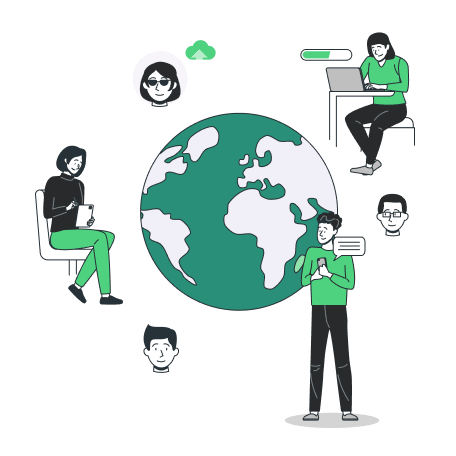
The global workforce of 2026 isn’t confined to a 9‑to‑5 schedule or the boundaries of a single geography. Distributed teams span time zones, asynchronous collaboration is the norm, and work continuously flows across continents. This “always‑on” work environment offers opportunities for speed and responsiveness — but it also introduces distinct psychological dynamics that affect wellbeing, focus, motivation, and long‑term performance.
Understanding the psychology of work in a 24/7 global workforce isn’t just HR theory. It’s a strategic imperative for leaders who want to sustain engagement, reduce burnout, and build high‑functioning global teams.
Blog Summary
Purpose
To explain how constant global workflows influence employee psychology, and to provide practical guidance for organisations to support wellbeing, performance, and sustainable collaboration.
Structure
- What a 24/7 Global Workforce Really Means
- Psychological Impacts of Distributed, Around‑the‑Clock Work
- Core Principles for Healthy Global Collaboration
- Practical Approaches for Organisations
- Measuring Psychological Health in Distributed Teams
Use Cases
- HR and talent leaders building remote work strategies
- Team leads managing cross‑time‑zone teams
- Executives looking to sustain high performance without burnout
Key Takeaways
• Around‑the‑clock work affects sleep, focus, and stress systems.
• Psychological safety and autonomy improve engagement.
• Structures that balance async workflows and rest reduce burnout.
• Regular measurement and adjustment is critical.
Formatting & Readability Features
Clear headers, bullets, actionable insights.
1. What a 24/7 Global Workforce Really Means
A 24/7 global workforce isn’t simply about employees working at all hours. It’s a system where:
- Work is continuously in motion: Tasks, feedback loops, collaboration, and decision‑making can happen at any hour.
- Teams don’t share a common clock: Colleagues in East Asia, Europe, and North America might never overlap in real time.
- Async collaboration is default: Documentation, handoffs, and structured communication carry the work forward.
This work architecture can boost throughput and speed, but it also changes the psychological ecology of work — especially when individuals and teams struggle to disconnect or feel constantly “on.”
2. Psychological Impacts of Global, Around‑the‑Clock Work
Operating in an asynchronous ecosystem affects people at multiple psychological levels:
Cognitive Load and Attention Fragmentation
When work is always flowing:
- Attention becomes fragmented across time zones.
- Individuals juggle overlapping threads of communication.
- Multitasking increases, reducing deep focus.
Impact: Decreased concentration, more cognitive fatigue.
Stress and Hyper‑Responsiveness
The subtle pressure to respond quickly — even when not required — triggers stress responses:
- Cortisol spikes from “anticipation of demand.”
- The brain stays in readiness mode, reducing ability to relax.
Impact: Elevated stress, fatigue, and burnout risk.
Social Disconnection and Isolation
Limited real‑time interaction can make collaboration feel transactional rather than relational.
- Reduced spontaneous social cues.
- Fewer informal interactions build rapport.
Impact: Reduced psychological safety and team cohesion.
Boundary Erosion
Without clear temporal boundaries:
- Work creeps into personal time.
- Even asynchronous tasks can feel urgent.
- People struggle to define “off hours.”
Impact: Work‑life imbalance and increased burnout.
3. Core Principles for Healthy Global Collaboration
Healthy teams don’t just exist — they’re designed. The psychology of global work improves when organisations embrace three core principles:
Psychological Safety
Team members must trust that:
- Asking for help is ok.
- Not responding immediately won’t be penalised.
- Mistakes are opportunities to learn.
This reduces anxiety and encourages open communication.
Autonomy and Control
When individuals control when and how they work, engagement rises and stress falls:
- Task focus windows aligned to personal energy patterns can improve performance.
- Flexible schedules reduce conflict between work and personal life.
Predictability
Clarity about:
- Expected response times
- Core hours for collaboration
- Decision rights
reduces cognitive strain.
4. Practical Approaches for Organisations
Here are actionable ways to support psychological wellbeing in an always‑on global workforce.
Design with Intentional Boundaries
Establish standards such as:
- Core overlap hours that rotate fairly
- Silence periods where notifications are restrained
- Clear async norms about what needs live collaboration vs documentation
These boundaries protect focused work and rest.
Encourage Structured Communication
- Written summaries instead of real‑time interruptions
- Explicit next actions in handoff messages
- Templates for async collaboration
Structure reduces load and ambiguity.
Set Response Time Expectations
Not every communication deserves an immediate reply. Define service‑level expectations for:
- Immediate (<2 hours)
- Next business day
- Routine (2–3 days)
This prevents urgency inflation.
Invest in Psychological Safety
Leadership plays a key role:
- Encourage team members to voice boundaries
- Recognise when someone is overloaded
- Celebrate behaviours that support sustainable collaboration
Support Recovery and Rest
Promote practices like:
- No‑meeting days
- Time‑off buffers after major launches
- Reminders to log off
Rest isn’t a perk — it’s productivity insurance.
5. Measuring Psychological Health in Distributed Teams
You can’t manage what you don’t measure. Here are practical metrics:
1. Engagement and Stress Surveys
- Regular pulse surveys asking about workload and burnout signs
- Questions tied to async norms and boundary adherence
2. Work Rhythm Analytics
- Frequency of after‑hours communications
- Meeting overload indicators
- Async completion vs real‑time concurrency
3. Role Clarity and Support
- Survey if team members know response expectations
- Assess if psychological safety norms are understood
4. Turnover and Absence Patterns
Sudden increases in:
- Attrition
- Sick days
- Time‑off requests
can indicate stress accumulation.
Conclusion
A 24/7 global workforce can elevate productivity and responsiveness — if it’s built on a foundation that respects psychology. Organisations that design work boundaries, clear expectations, and supportive structures reduce stress and foster engagement rather than overload.
The psychology of global work isn’t about eliminating asynchronous collaboration — it’s about shaping it so individuals can be focused, well, and sustainable over time.
Sources
- Harvard Business Review
- Stanford Psyche Reports on Work Patterns
- Gallup Workplace Research
- World Health Organization on Workplace Burnout
- McKinsey Global Institute on Remote Work Productivity
- Deloitte Human Capital Trends
Related Resources
January 30, 2026
Cross‑Functional Skill Pods: The Future of Internal Mobility
January 30, 2026
Real‑Time Feedback Systems That Replace Annual Reviews
January 30, 2026
AI Governance Frameworks Every Talent Team Should Deploy in 2026
January 29, 2026
The Psychology of Work in a 24/7 Global Workforce
January 29, 2026
The Ethics of Predictive Hiring: Beyond Compliance
January 29, 2026
The Unspoken Career Advantage of Working in a GCC
January 29, 2026
Shadow AI in Global Teams: The Security Risk Nobody Budgets For
January 29, 2026
Why Global Talent Hubs Remain Central Even as Nearshoring Expands
Schedule a personalized 1:1
Lorem ipsum dolor sit amet, consectetur adipiscing elit, sed do eiusmod tempor incididunt ut labore et dolore magna aliqua.